
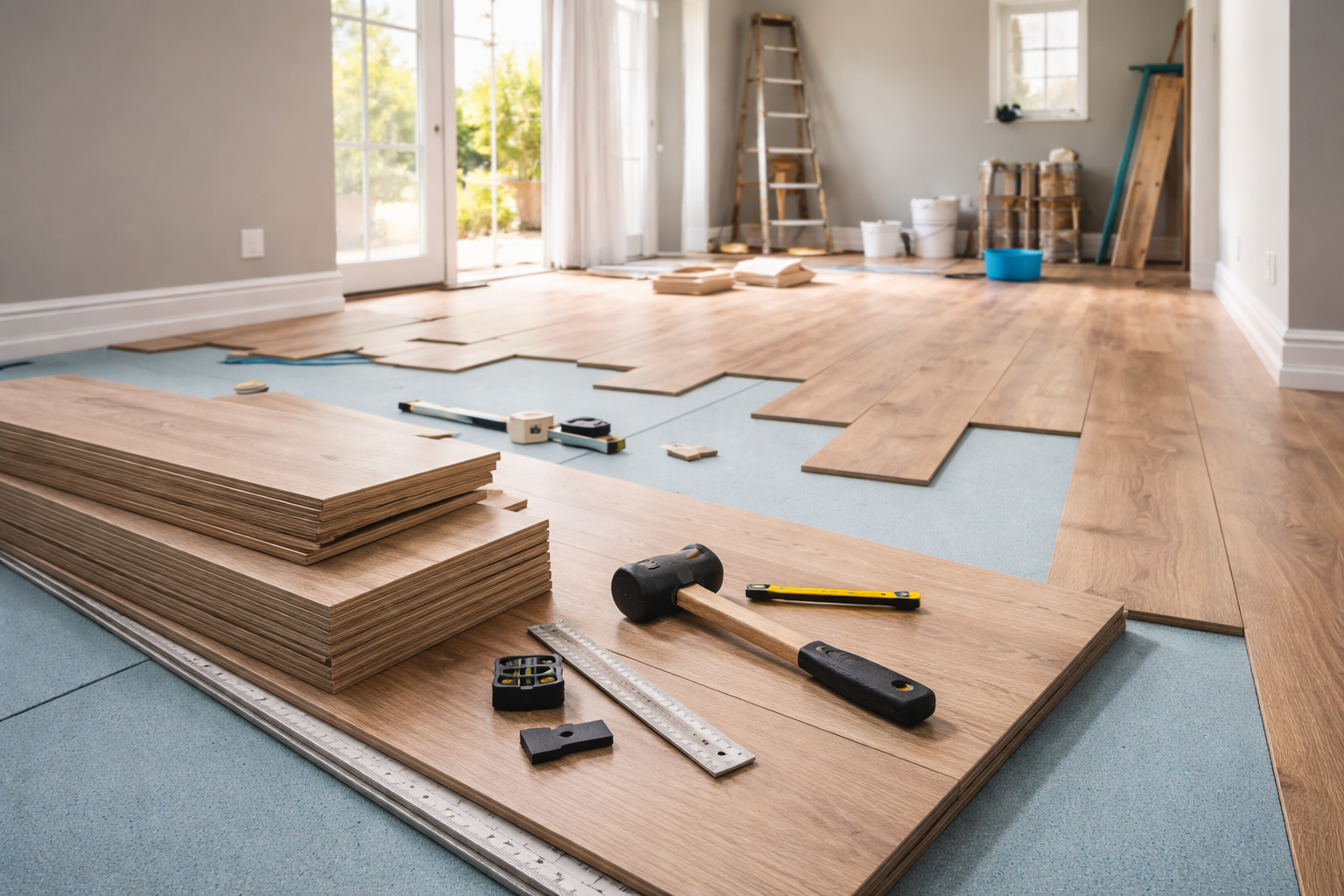
One of the most common mistakes in a renovation isn’t the flooring itself — it’s doing things in the wrong order.
It’s easy to assume flooring can just be fitted whenever the room “looks ready”, but timing plays a big role in how well it performs long-term. Get the order wrong and you can end up damaging the floor before you’ve even properly used it, or creating problems that show up later.
The right approach isn’t complicated, but it does need to follow a logical sequence based on how materials behave and how other trades affect the space.
Start With Structural and Messy Work First
Before any flooring is even considered, all heavy or disruptive work needs to be completed.
This includes:
- structural changes
- plastering
- major electrical or plumbing work
- anything that creates dust, moisture or movement
The reason is simple. Flooring is a finished surface. Once it’s down, it’s exposed. Dust, moisture and impact from other work can damage it before the job is even finished.
Plastering in particular is important. It introduces moisture into the space, and that needs time to dry properly before anything goes on top of the floor.
Make Sure the Subfloor Is Fully Ready
This is where most issues start.
The subfloor needs to be:
- Dry
- Level
- Stable
If it isn’t, the final floor will only highlight those problems rather than hide them.
For example, uneven areas can lead to movement or visible dips once the flooring is installed. Moisture, even if it’s not obvious at the surface, can cause long-term issues depending on the material used.
This is the stage where preparation work like levelling or screeding is done if needed. It’s not the most visible part of the job, but it’s one of the most important.
Let the Space Fully Dry and Settle
Once plastering and subfloor work are complete, the space needs time to stabilise.
Rushing this stage is where people run into problems later. Even if everything looks dry, there can still be moisture present underneath the surface.
This is particularly important before installing materials like laminate or real wood, which are more sensitive to moisture and movement.
Good airflow and time are what make the difference here. Trying to speed it up artificially often leads to issues that don’t show until after installation.
Fit Skirting Boards or Decide Your Approach
There are two common ways to handle skirting in relation to flooring, and this decision affects the order.
Some choose to install skirting first and run flooring up to it, using trims where needed. Others fit the flooring first and then install skirting on top for a cleaner finish.
Neither is wrong, but it needs to be planned. Changing your mind halfway through can lead to unnecessary rework or a finish that doesn’t look right.
Install the Flooring at the Right Time
Once the space is dry, clean and prepared, flooring can be installed.
At this point, everything else that could damage it should already be done. That includes messy trades and any work that introduces moisture into the room.
Different materials behave slightly differently once installed.
LVT, for example, is more forgiving in terms of moisture at the surface, but still relies on a properly prepared base. If adhesives are involved, conditions need to be right for them to set correctly.
Other materials like laminate or real wood are less forgiving and rely more heavily on stable conditions.
Avoid Installing Too Early
One of the biggest mistakes is fitting flooring too soon in an attempt to move the job along.
It might look fine at first, but issues often develop later:
- Movement Underfoot
- Lifting or Gaps
- Uneven Areas Becoming More Noticeable
These problems are usually linked to the condition of the subfloor or the timing of installation, not the flooring itself.
Waiting until everything is properly ready avoids having to go back and fix problems that could have been prevented.
Bring in Finishing Touches After Flooring
Once the flooring is down, final finishing work can be completed.
This includes:
- Final Decorating Touch-Ups
- Fitting Trims or Thresholds
- Placing Furniture
Care still needs to be taken at this stage. Dragging heavy items across a new floor or exposing it to unnecessary impact can mark it early on.
If areas like bedrooms are being finished, this is also where carpet is often installed last, once the rest of the work is complete and the environment is clean.
Think About the Whole Project, Not Just One Room
In larger renovations, the order also depends on how the space is being worked on overall.
Sometimes it makes sense to complete flooring room by room. In other cases, especially where continuity is important, it’s better to wait and install flooring across multiple areas at once.
Planning this properly avoids awkward transitions or mismatched levels between rooms.
The Practical Reality
Flooring is one of the last major steps in most renovations for a reason.
It sits on top of everything else, and its performance depends heavily on what’s underneath and what’s already been done in the space.
In our experience at Floors-2u, most issues with flooring don’t come from the material itself but from the stage it was installed in. Getting the order right removes a lot of those risks before they even have a chance to appear.