
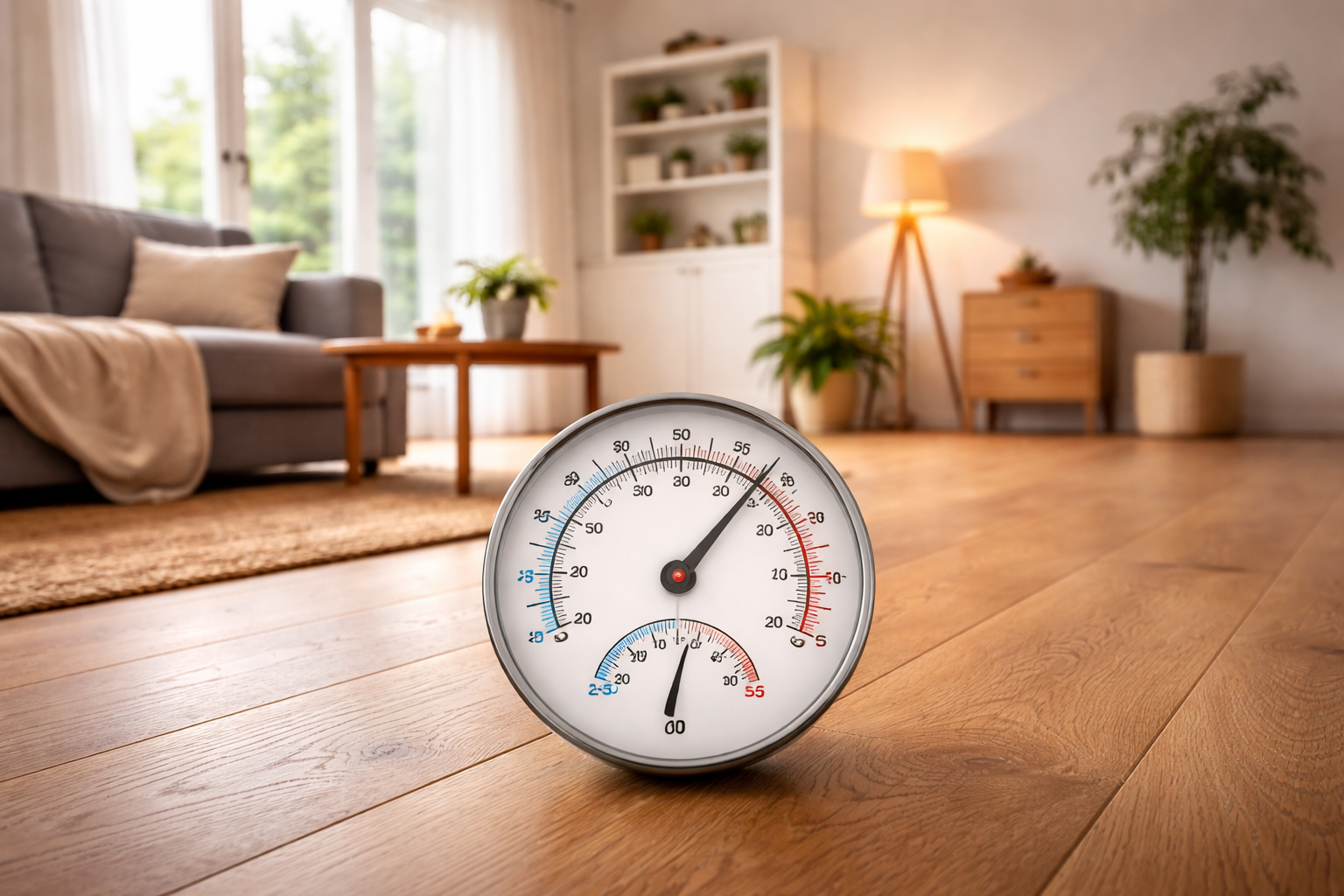
It’s something a lot of people overlook, but room temperature plays a bigger role in flooring than most expect.
On the surface, it might seem like flooring can be installed whenever the space is ready. The floor looks flat, the materials are on site, and everything appears good to go. But temperature and conditions inside the room can affect how flooring behaves both during and after installation.
Get it right and the floor performs as expected. Get it wrong and you can end up with movement, gaps, lifting or other issues that only show once everything is finished.
Why Temperature Actually Matters
Flooring materials aren’t static. They expand and contract depending on the environment they’re in.
Temperature affects:
- how materials settle
- how they react after fitting
- how adhesives perform
- how stable the subfloor feels
If flooring is installed in a room that’s too cold, too hot or fluctuating, it can behave differently once conditions return to normal.
That’s when problems start to appear. The floor hasn’t failed — it’s just reacting to a change in environment.
The Role of Acclimatisation
One of the most important steps before installing flooring is acclimatisation.
This simply means allowing the flooring to sit in the room it’s going to be installed in, so it can adjust to the temperature and humidity of that space.
Skipping this step is where a lot of issues come from.
Materials arrive from:
- warehouses
- delivery vans
- storage conditions
All of which can be very different from the room they’re going into.
If you install flooring straight away, you’re locking it into place before it’s had a chance to settle. Once it adjusts afterwards, that’s when you can see:
- expansion
- contraction
- movement at joins
Which Flooring Needs Acclimatisation?
Not all flooring behaves the same, but some types are more sensitive than others.
laminate is one of the main ones. It needs time to adjust to the room before installation, otherwise it can expand or contract once fitted.
real wood is even more sensitive. Because it’s a natural material, it reacts more noticeably to temperature and moisture changes. Proper acclimatisation is essential to avoid long-term movement.
LVT is generally more stable, but it still benefits from being brought to room temperature before installation. Adhesives used with certain types also rely on consistent conditions to set properly.
Even with carpet, temperature can affect how materials behave during fitting, particularly with underlay and adhesives.
What Happens If the Room Is Too Cold?
Cold conditions can cause a few different issues.
Materials may contract slightly, meaning once the room warms up, they expand and create pressure. That can lead to:
- tight joins
- lifting in certain areas
- stress on the floor structure
Adhesives can also struggle in colder temperatures. If they don’t cure properly, sections of flooring may not bond as intended.
Working in a cold room can also make installation more difficult, as materials are less flexible and harder to handle accurately.
What Happens If the Room Is Too Warm?
Heat can have the opposite effect.
Materials may expand slightly before installation, which can result in gaps forming later once the temperature drops.
In rooms with strong sunlight or underfloor heating, temperature differences can be even more noticeable. Certain areas of the floor may react differently depending on exposure, which can lead to uneven movement.
This is why consistent conditions matter more than just the temperature itself.
Why Stable Conditions Are More Important Than Exact Numbers
It’s not just about hitting a specific temperature. What matters more is that the environment is stable.
Rapid changes in temperature are where problems tend to happen. A room that goes from cold to warm quickly, or fluctuates throughout the day, can cause flooring to react after installation.
Ideally, the space should be:
- enclosed
- dry
- at a consistent, comfortable indoor temperature
This allows the flooring to settle properly and reduces the risk of movement later on.
Timing Within a Renovation
Temperature links closely to when flooring is installed within a project.
If flooring is fitted too early, before the space is properly enclosed or heated, conditions are likely to change significantly afterwards.
For example:
- windows not fitted yet
- heating not turned on
- recent plastering still drying
All of these affect the environment and can cause issues if flooring is already down.
Waiting until the space is stable makes a big difference to how well the floor performs.
How Long Should Flooring Acclimatise?
This depends on the material, but as a general guide:
- laminate typically needs at least 48 hours
- real wood may need longer depending on conditions
- LVT usually requires less time but should still reach room temperature
The key is not rushing it. Giving materials time to adjust reduces the chance of movement after installation.
The Practical Reality
Most flooring issues linked to temperature don’t come from extreme conditions. They come from small oversights.
Installing too soon, skipping acclimatisation or working in a space that isn’t fully stable can all lead to problems that only show later.
Most problems linked to temperature don’t come from extreme conditions, they come from small things being rushed or overlooked. Installing too early, skipping acclimatisation or working in a space that isn’t stable can all lead to issues that only show once the floor is down. It’s something Floors-2u regularly comes across when looking at jobs where things haven’t quite gone to plan.