
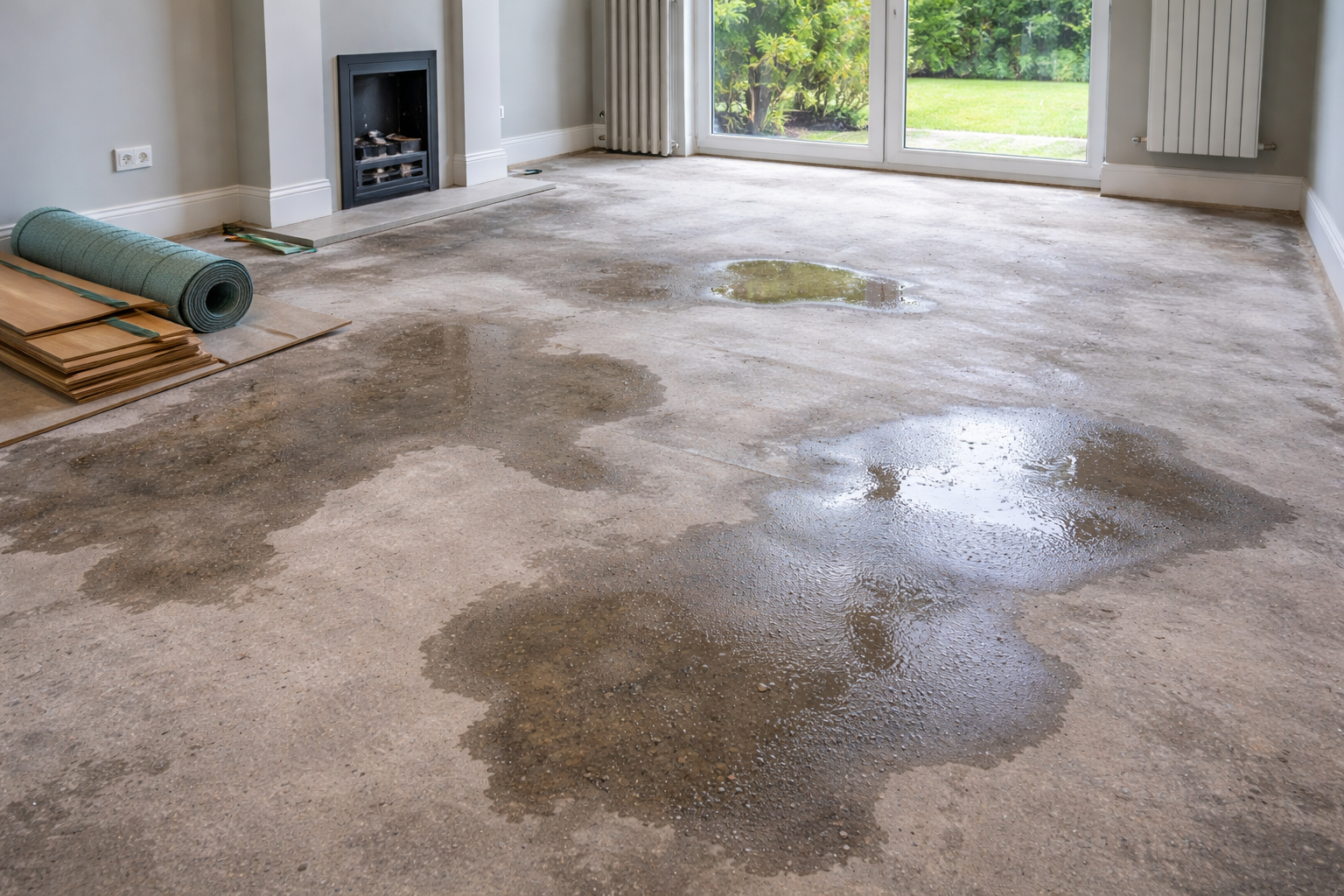
It’s one of the most common situations people run into during a renovation or refit. The floor looks nearly ready, timelines are tight, and the question comes up — is it dry enough to go ahead, or does it need more time?
On the surface, it can seem like a small detail. In reality, moisture is one of the biggest causes of flooring failure. Getting this wrong doesn’t always show immediately either. Problems often appear weeks or months later, once everything has already been installed.
Understanding what “dry enough” actually means is the difference between a floor that lasts and one that starts causing issues not long after fitting.
Why Dryness Matters More Than People Think
Most subfloors, whether concrete or screed, hold moisture after being laid. Even when the surface feels dry to the touch, there can still be moisture trapped beneath.
When flooring is installed too early, that moisture has nowhere to go. Instead of evaporating naturally, it becomes trapped between the subfloor and the flooring material.
Over time, this can lead to a range of issues. Boards can start lifting or shifting, adhesives can fail, and visible marks or discolouration can begin to appear. In many cases, the floor also starts to feel uneven underfoot.
The frustrating part is that these problems don’t always show straight away. The floor might look fine at first, which is why people assume it was safe to install. Then gradually, issues start to appear once it’s already down.
Different Flooring Types React Differently
Not all flooring reacts the same way to moisture, but none of them benefit from being installed on a damp surface.
With laminate, moisture is a common cause of swelling and edge lifting. Even small amounts of trapped damp can affect the core of the boards, leading to visible expansion and long-term damage.
lvt is more resistant to moisture on the surface, but that doesn’t mean it can be laid onto a damp subfloor without risk. If adhesive is used, moisture can weaken the bond, causing sections to come loose or shift over time.
With real wood, the risks are higher. Wood naturally reacts to moisture, expanding and contracting depending on conditions. If it’s installed onto a damp base, it can lead to movement, warping or permanent damage.
Even carpet isn’t immune. Damp underneath can lead to odours, mould and deterioration in the underlay, which affects both comfort and hygiene.
When a Floor Looks Dry but Isn’t
One of the biggest mistakes is relying on how the floor looks or feels.
A surface can appear dry within a short time, especially in warmer conditions, but that doesn’t mean the moisture has fully left the material. Drying happens from the top down, so what you see on the surface isn’t always a true reflection of what’s happening underneath.
This is particularly common with screed and concrete. They can take far longer to dry than expected, and rushing that process is where problems usually start.
How Long Does It Actually Take to Dry?
Drying times vary depending on the material, thickness and conditions, but they’re often longer than people assume.
Standard screed can take several weeks to fully dry, and thicker layers take even longer. Ventilation plays a big role as well. Poor airflow slows the process down, while good airflow helps moisture escape naturally.
Heating can help, but it needs to be controlled. Trying to force the drying process too quickly can dry the surface while leaving moisture trapped underneath, which defeats the point.
What Happens If You Lay Flooring Too Early?
Installing flooring onto a damp base doesn’t always cause immediate failure, which is why it catches people out.
The issues tend to build over time. Adhesive can start losing strength, boards may begin to move, and small gaps or lifting can appear. In some cases, the floor starts to feel uneven or unstable underfoot.
Once these problems start, they’re difficult to fix without lifting the floor and addressing the moisture properly. That usually means redoing work that could have been avoided.
How to Know If It’s Ready
The only reliable way to know if a floor is ready is through proper moisture testing.
Visual checks and touch aren’t enough. A floor can feel completely dry on the surface but still hold moisture underneath. Testing removes the guesswork and confirms whether it’s safe to install flooring.
If there’s any uncertainty, waiting is always the safer option. A short delay is far less of an issue than dealing with a failed floor later.
Can You Work Around It?
There are ways to manage moisture in certain situations, such as using damp proof membranes or specialist preparation products.
However, these aren’t shortcuts for a floor that hasn’t dried. They’re used in controlled conditions where moisture levels are already understood.
Trying to use them to bypass proper drying time often leads to the same problems showing up later.
The Practical Reality
Most issues caused by moisture come down to timing. The pressure to get a job finished leads to flooring being installed before the subfloor is properly ready.
What matters isn’t how the floor looks — it’s what’s happening underneath.
In our experience at Floors-2u, the jobs that last are always the ones where preparation and drying time aren’t rushed. Once that part is done properly, everything else tends to follow.