
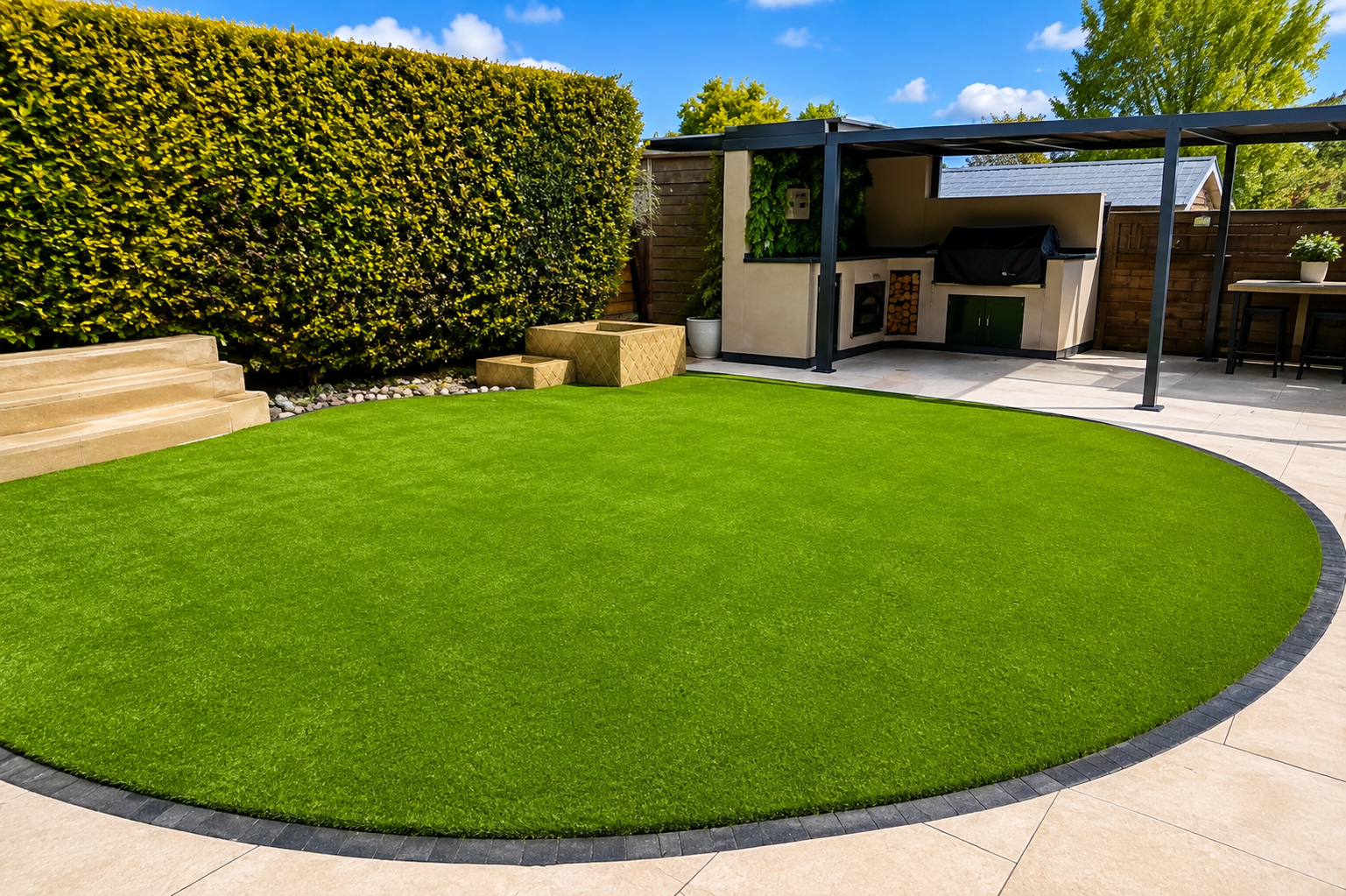
Artificial grass has changed considerably over the years. Modern products can look surprisingly realistic, cope with heavy use and provide a practical alternative to a natural lawn in gardens, play areas and other outdoor spaces.
But while choosing the right artificial grass or astro turf is important, what goes underneath it can have just as much impact on the finished result.
One of the most common questions is whether artificial grass needs underlay. The answer is: not always. Unlike indoor carpet, where underlay is commonly used for comfort, insulation and to support the carpet, artificial grass can be installed successfully without a separate underlay in many situations.
Whether you need one depends mainly on the existing surface, how the area will be used and the type of finish required.
What Goes Under Artificial Grass?
For a typical garden installation where existing natural turf is being removed, artificial grass isn’t simply laid directly onto the soil.
The ground normally needs to be excavated and properly prepared first. A typical installation may involve:
- Removing the existing grass, vegetation and top layer of soil
- Installing an appropriate sub-base
- Compacting the sub-base to create a firm and stable surface
- Adding a finer laying course where required
- Installing a suitable weed membrane
- Laying and securing the artificial grass
The exact construction can vary depending on the ground conditions, drainage requirements and intended use of the area.
This preparation is particularly important because artificial grass itself cannot compensate for an unstable or badly prepared surface. If the ground underneath moves, sinks or develops low spots, those imperfections can eventually become visible through the finished grass.
So, Does Artificial Grass Actually Need Underlay?
For many standard domestic garden installations, a separate shock pad or foam underlay isn’t necessary.
A properly prepared and compacted base can provide the stability needed for artificial grass without adding another layer.
There are, however, situations where an underlay or shock pad can be useful.
For example, it may be installed to provide additional cushioning in children’s play areas or spaces where reducing the impact of falls is important. It can also be used when a softer feel underfoot is preferred.
The important distinction is that artificial grass underlay shouldn’t be viewed in exactly the same way as carpet underlay. Although both products involve a textile-style surface being installed over a prepared base, the requirements underneath them are very different.
Indoor carpet underlay is designed for an internal, dry environment. Artificial grass systems have to deal with rainwater, drainage, temperature changes and outdoor ground conditions.
What About Installing Astro Turf Over Concrete?
Artificial grass can also be installed over certain existing hard surfaces, including concrete.
This is one situation where an underlay can become particularly useful.
Concrete provides a solid and stable base, but it is obviously very hard. Installing astro turf directly over it may therefore produce a firmer finish than expected.
A suitable outdoor underlay or shock pad can provide some cushioning between the concrete and the artificial grass.
Before anything is installed, however, the condition of the concrete needs to be considered. Significant cracks, uneven sections or areas where water collects may need attention first.
Drainage is particularly important. Artificial grass is normally designed to allow water through it, but that water still needs somewhere to go. Laying a permeable surface over concrete does not automatically solve an existing drainage problem.
Can Artificial Grass Be Laid Directly Over Soil?
Generally, laying artificial grass straight onto ordinary soil isn’t a good idea.
Soil changes depending on moisture levels and weather conditions. It can become soft, compact unevenly and move over time. Organic material underneath the grass can also decompose, creating further movement.
The result can be dips, bumps and an uneven-looking lawn.
Proper excavation and base preparation create a much more stable platform for the artificial grass and help the finished surface remain consistent.
It’s similar to a principle that applies throughout the flooring industry: the finished surface is only as good as the base underneath it.
Whether Floors2U is looking at an indoor floor or an outdoor artificial grass installation, preparation is a major part of achieving a good finished result.
Does Artificial Grass Need a Weed Membrane?
A weed membrane is commonly incorporated into artificial grass installations, although its position within the build-up can vary depending on the installation method and site conditions.
Its purpose is to reduce the likelihood of weeds growing through from underneath the finished surface.
However, a membrane doesn’t mean an artificial lawn can never develop weeds.
Seeds can arrive from above through wind, birds and surrounding plants. They may settle into debris that accumulates within the artificial grass and eventually germinate.
These surface weeds are different from established weeds growing through from the ground below and are generally much easier to deal with.
Is Artificial Grass Underlay Waterproof?
Products specifically designed as underlay or shock pads for artificial grass should be suitable for exterior use and compatible with the drainage requirements of the installation.
This is important because ordinary indoor flooring underlay isn’t designed for the same conditions.
Using a standard carpet underlay underneath artificial grass outdoors could interfere with drainage and the material may deteriorate when repeatedly exposed to moisture.
If an underlay is required, it needs to be a product intended for use as part of an artificial grass system.
Does a Shock Pad Make Artificial Grass Feel Softer?
Yes. A suitable shock pad can make the surface feel more cushioned underfoot.
Whether that’s necessary is another question.
For a normal domestic lawn, many people are perfectly happy with artificial grass installed over a correctly prepared base. Modern artificial grass itself can provide a relatively soft surface depending on the pile height, density and construction.
Shock pads become more relevant where additional cushioning is specifically required, such as certain play areas.
It’s therefore better to think of underlay as an optional component for particular applications, rather than something every artificial grass installation automatically needs.
What Is the Most Important Part of an Artificial Grass Installation?
It is easy to concentrate on the appearance of the grass itself, but preparation underneath it is arguably just as important.
An artificial lawn can look excellent when first installed, but inadequate preparation may cause problems later.
Common issues associated with poor preparation can include:
- Uneven areas developing across the lawn
- Visible dips or bumps
- Movement underneath the grass
- Poor drainage or standing water
- Edges becoming insecure
- Weeds becoming more difficult to control
The base needs to be stable, appropriately compacted and suitable for the drainage conditions of the particular site.
There isn’t necessarily one universal specification that works for every garden. Soil type, existing levels, surrounding paving, drainage and intended use can all affect how an area should be prepared.
Artificial Grass vs Astro Turf: Is There a Difference?
The terms artificial grass and astro turf are often used interchangeably when talking about synthetic lawns, but technically they aren’t exactly the same thing.
AstroTurf was originally a brand name associated with synthetic sports surfaces. Over time, “astro turf” or “astroturf” became a common everyday term for artificial grass in general.
Today, when someone says they want astro turf in their garden, they are usually referring to modern artificial grass rather than the short, relatively hard synthetic surfaces historically associated with sports pitches.
Modern landscaping products are available in different pile heights, shades, densities and constructions designed to replicate the appearance and feel of natural grass much more closely.
How Long Should a Properly Installed Artificial Lawn Last?
There isn’t a single lifespan that applies to every artificial lawn.
Durability depends on the quality and construction of the product, the amount of foot traffic it receives, exposure to the elements, how well the base was prepared and how the surface is maintained.
A lightly used back garden will naturally experience different conditions from a children’s play area or heavily used commercial space.
Routine maintenance can also make a difference. Removing leaves and debris, brushing the pile when necessary and dealing with weeds or contamination before they build up can help keep the surface looking better.
The Bottom Line
Artificial grass does not automatically need underlay.
For many garden installations, the priority is creating a stable, well-drained and properly compacted base underneath the grass. If that preparation is done correctly, a separate underlay may provide little additional benefit.
However, outdoor underlay or shock pads can be useful when installing artificial grass over hard surfaces such as concrete, when additional cushioning is wanted or when the area has specific impact requirements.
The key is to treat the whole installation as a system rather than concentrating solely on the artificial grass itself. The grass may be the only part you see when the job is finished, but what sits underneath it has a major influence on how well the surface performs over time.