
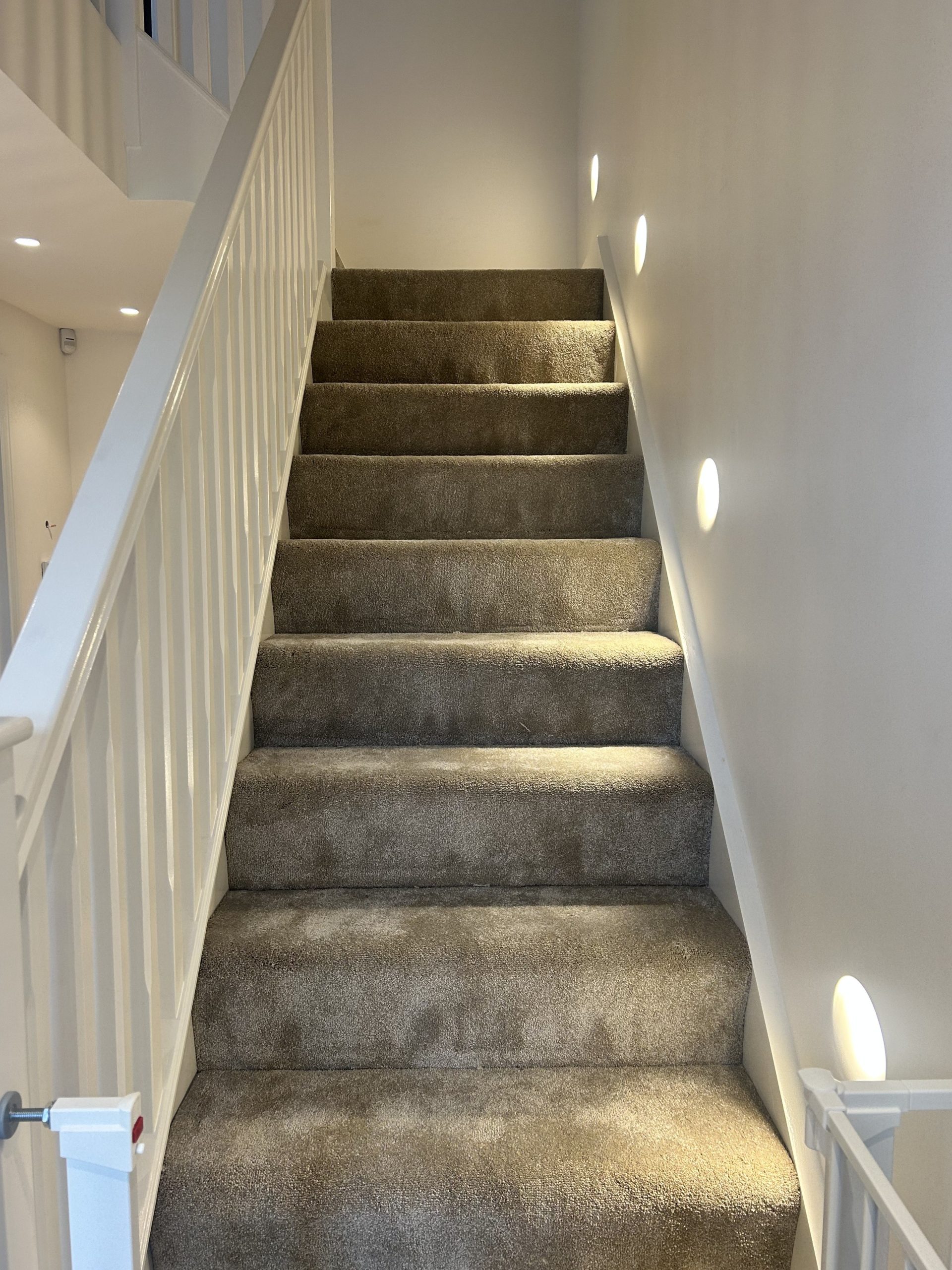
Choosing the right carpet for stairs is slightly different from choosing carpet for a bedroom or living room. Stairs experience far more concentrated foot traffic, which means the carpet needs to be durable, secure underfoot, and able to maintain its appearance over time.
Many homeowners focus mainly on colour or style when selecting carpet, but when it comes to stairs the construction and material of the carpet are just as important. Certain carpet types cope far better with the daily wear and tear that staircases receive.
Understanding the different carpet styles available can help you choose a stair carpet that not only looks good but also performs well for years.
Why stairs need a different type of carpet
Staircases are one of the highest-traffic areas in most homes. Every time someone walks up or down the stairs, their weight is concentrated on a small section of each step. This repeated pressure means stair carpets tend to wear faster than carpets installed in other rooms.
Because of this, the best carpet for stairs needs to be:
- Durable and dense
- Resistant to flattening or crushing
- Secure when fitted to prevent slipping
- Able to maintain its appearance over time
Carpets that perform well in bedrooms, for example very soft or deep pile carpets, may not always be the most practical option for staircases.
Loop pile carpets
Loop pile carpets are one of the most popular choices for stairs. These carpets are made with loops of yarn rather than cut fibres, creating a more structured and durable surface.
Because the fibres are looped, they tend to hold their shape better under heavy foot traffic. This makes them a practical option for busy homes where the staircase is used frequently.
Loop pile carpets often have a slightly textured appearance and are commonly seen in modern interiors. They can also be used effectively for stair runners, where the carpet sits in the centre of the staircase with exposed edges on each side.
One thing to consider with loop pile carpets is that pets’ claws can sometimes catch on the loops, so this may be worth keeping in mind for households with animals.
Twist pile carpets
Twist pile carpets are another excellent option for stairs and are widely used in homes across the UK. In this style of carpet, the fibres are tightly twisted together to create a durable and resilient surface.
The tight twist helps the carpet bounce back after being walked on, which makes it suitable for areas that experience regular foot traffic.
Twist carpets are also available in a wide range of colours and textures, making them a versatile choice for both traditional and modern interiors. Many homeowners choose twist carpets for stairs because they strike a good balance between comfort and durability.
Wool carpets
Wool carpets are often considered one of the best natural options for staircases. Wool fibres are naturally resilient and tend to recover well after being compressed by foot traffic.
Another advantage of wool is that it has a natural elasticity, which helps it maintain its shape over time. Wool carpets can also be very comfortable underfoot and provide a premium appearance.
However, wool carpets can sometimes be more expensive than synthetic alternatives. Many carpets available today combine wool with synthetic fibres to create a blend that balances durability, comfort, and affordability.
Synthetic carpets
Synthetic carpets made from materials such as polypropylene or nylon are also commonly used on stairs. These fibres are designed to be hard-wearing and can perform well in busy areas of the home.
One of the advantages of synthetic carpets is their resistance to staining and moisture, which can make them easier to maintain in households with children or pets.
Many modern synthetic carpets are designed to replicate the appearance and feel of natural fibres while offering increased durability.
The importance of carpet density
When selecting a carpet for stairs, density is just as important as the type of fibre used. A dense carpet contains more fibres packed closely together, which helps it resist flattening and wear.
Carpets with a higher density generally perform better on staircases because they can withstand repeated foot traffic without quickly losing their appearance.
When viewing carpet samples, it can sometimes be helpful to feel the backing of the carpet. If the fibres are tightly packed and the backing is not easily visible, the carpet is likely to be more durable.
Why underlay matters on stairs
Underlay is another important factor that can affect how well a stair carpet performs. A good quality underlay provides cushioning underfoot and helps reduce the impact of foot traffic on the carpet itself.
This extra support can extend the lifespan of the carpet and also make the stairs more comfortable to walk on.
Underlay can also improve grip and stability when the carpet is fitted correctly, which is particularly important on staircases.
Stair runners vs full stair carpet
Another choice homeowners often consider is whether to install a full carpet across the entire staircase or use a stair runner.
A stair runner covers only the centre section of the staircase, leaving the edges of the stairs visible. This style has become increasingly popular in modern homes and can create a more decorative look.
Full stair carpets, on the other hand, cover the entire width of the staircase and may provide a slightly softer and more uniform finish.
Both options can work well depending on the overall style of the home and the type of carpet selected.
Choosing the right carpet for your home
Ultimately, the best carpet for stairs is one that balances durability, comfort, and appearance. Loop pile and twist carpets are generally among the most practical choices because they cope well with the heavy wear that staircases experience. At Floors2U, we regularly see homeowners choosing these styles for their staircases because they offer a good balance of durability and appearance.
Natural fibres such as wool can offer excellent resilience, while modern synthetic carpets can provide strong durability and easy maintenance.
By selecting a carpet that is dense, well-constructed, and professionally fitted, homeowners can ensure their staircase remains both comfortable and attractive for years to come.