
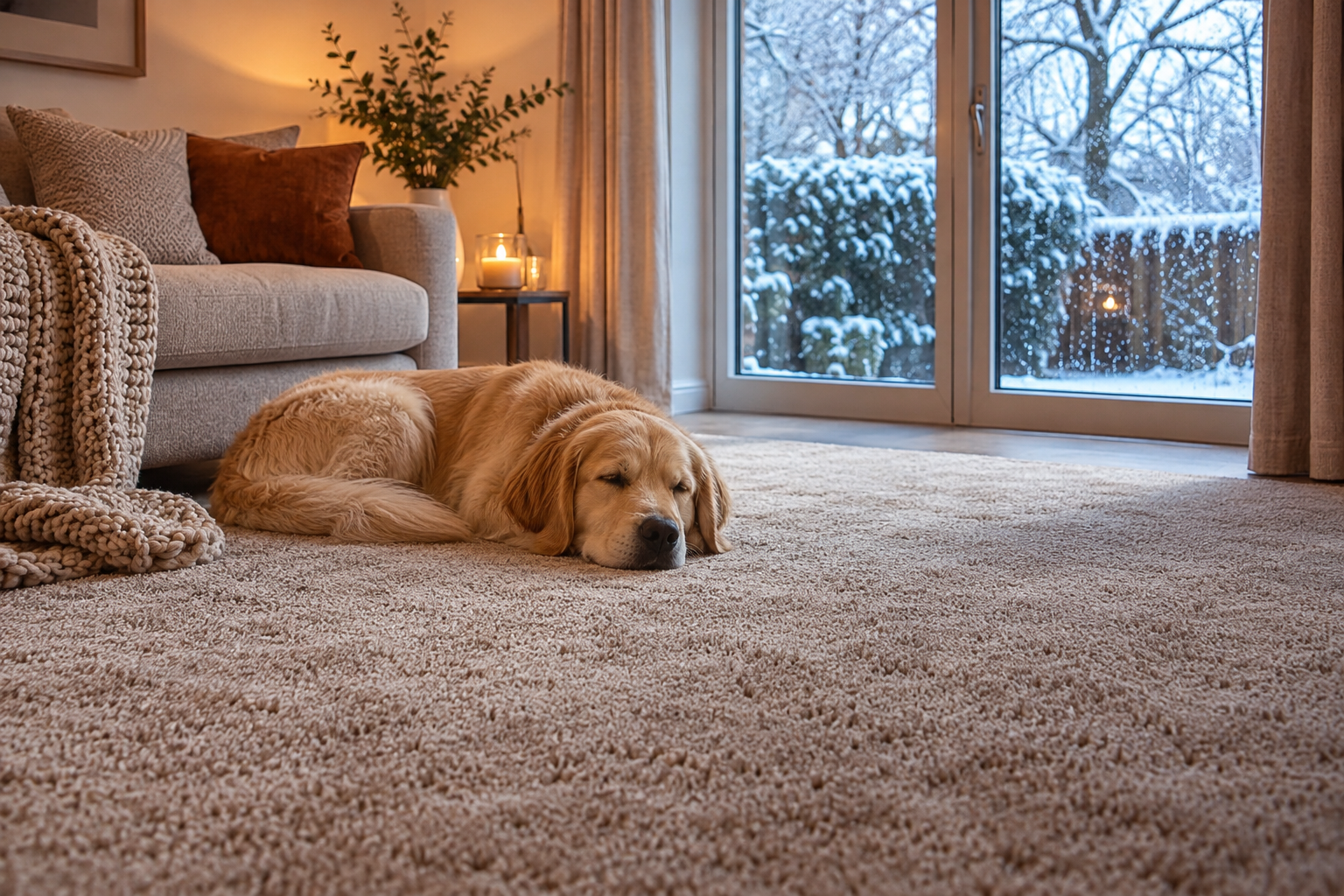
As the temperatures drop and winter settles in, you might notice that your floors suddenly feel much colder underfoot. Whether it’s chilly tiles in the kitchen, cold laminate in the hallway or a living room that never seems to warm up, uncomfortable flooring can make your entire home feel less inviting.
But why does this happen, and is there anything you can do about it?
The answer often comes down to a combination of flooring materials, insulation, draughts and the way heat moves around your home. Fortunately, there are several ways to improve comfort without necessarily having to replace your entire floor.
In this guide, we’ll explore why floors feel colder during winter, which flooring options offer the most comfort and what you can do to create a warmer, cosier home.
Why Do Floors Get So Cold in Winter?
During winter, the temperature difference between the inside and outside of your home becomes much greater. This can make cold spots around floors particularly noticeable, especially in older properties.
Heat naturally moves from warmer areas towards colder ones. If your floor isn’t properly insulated, some of the warmth inside your home can escape through the floor structure.
However, not every floor that feels cold is necessarily losing large amounts of heat.
Materials such as ceramic tiles and stone conduct heat away from your feet relatively quickly, making them feel colder than carpet, even when both surfaces are at the same temperature.
Other factors that can contribute to cold floors include:
- Poor insulation beneath the flooring
- Gaps around skirting boards and floorboards
- Draughts entering through suspended timber floors
- Cold concrete subfloors
- Unheated rooms beneath the floor
- Inadequate or unsuitable underlay
Understanding what’s causing the problem is the first step towards finding the right solution.
Does Your Flooring Material Make a Difference?
Absolutely. Different flooring materials have different thermal properties, which can significantly affect how comfortable they feel during the colder months.
Carpet: A Warmer and Softer Choice
Carpet is one of the most comfortable flooring options for winter, particularly in bedrooms, living rooms and other spaces where warmth underfoot is important.
Unlike hard flooring, carpet contains fibres that trap small pockets of air, helping to slow the transfer of heat away from your feet.
A quality carpet paired with suitable underlay can also contribute to the thermal resistance of the overall floor covering.
This makes carpet particularly appealing for rooms where you want a cosy, welcoming atmosphere.
However, thickness alone doesn’t determine how warm a carpet will feel. Fibre construction, pile density and the underlay beneath it all play a role.
Luxury Vinyl Tiles (LVT): Comfort and Practicality
Luxury Vinyl Tiles have become increasingly popular among homeowners looking for a stylish, durable alternative to traditional hard flooring.
While LVT doesn’t offer the same insulating properties as carpet, it can feel more comfortable underfoot than materials such as ceramic tiles.
LVT is particularly well suited to kitchens, hallways and open plan living areas where easy maintenance and durability are priorities.
Some LVT products are also compatible with underfloor heating systems, provided the manufacturer’s installation requirements and temperature limits are followed.
It’s worth remembering that the condition and temperature of the subfloor can influence how warm LVT feels, particularly with glue down installations.
Laminate Flooring: Stylish but Dependent on What’s Beneath
Laminate flooring offers the appearance of natural wood at a more affordable price, making it a popular choice throughout the home.
However, if laminate is installed over a cold subfloor without suitable underlay, it may feel noticeably chilly during winter.
Choosing an appropriate underlay can improve comfort and, depending on the product, contribute some additional thermal resistance.
Underlay must always be selected according to the laminate manufacturer’s recommendations, as excessive softness or unsuitable thickness can affect the performance of the flooring.
Engineered Wood: Natural Warmth and Character
Engineered wood flooring is another attractive option for homeowners who prefer natural materials.
Wood generally transfers heat away from your feet more slowly than stone or ceramic tiles, which can make it feel more comfortable underfoot.
Engineered wood also offers a beautiful, timeless appearance that works particularly well in living rooms, dining rooms and bedrooms.
However, timber flooring responds to changes in humidity and temperature, so maintaining suitable indoor conditions throughout winter is important.
Could Your Underlay Be Making Your Floors Colder?
Underlay is often overlooked when choosing new flooring, but it can make a noticeable difference to comfort.
A suitable underlay provides support beneath the floor covering and may also offer thermal and acoustic benefits.
For carpet installations, a quality underlay can improve the overall feel underfoot while helping to reduce heat transfer through the floor covering.
With laminate and certain floating floors, specialist underlays are available with different thermal resistance ratings.
It’s important to choose the right product for the flooring and subfloor rather than simply selecting the thickest option available.
For example, underlay designed to provide additional thermal resistance may not be the best choice for a floor with underfloor heating, where efficient heat transfer is desirable.
At Floors-2U, we can advise on suitable underlay options based on your chosen flooring, the condition of your subfloor and how the room will be used.
How Much Difference Does Floor Insulation Make?
If your floors feel exceptionally cold, the problem may go beyond the flooring itself.
In many older homes across London and Essex, suspended timber floors can allow cold air to circulate beneath the floorboards. Without effective insulation and appropriate draught proofing, this can contribute to uncomfortable floor temperatures.
Concrete floors can also feel cold, particularly where insulation is limited or absent.
Proper floor insulation can help reduce heat loss, although the most suitable approach depends on the construction and condition of the property.
For suspended timber floors, insulation may be installed between the joists, with careful attention paid to maintaining necessary ventilation beneath the floor.
For solid floors, adding insulation can be more involved and may require alterations to floor levels, doors and surrounding finishes.
These types of improvements should be assessed by an appropriately qualified professional, particularly where moisture control and ventilation are concerned.
It’s also important to understand that carpet and underlay are not direct replacements for proper structural floor insulation.
Simple Ways to Make Your Floors Feel Warmer This Winter
If you’re not planning to replace your flooring immediately, there are several practical steps you can take to improve comfort.
- Use Rugs in Colder Areas
Adding a rug to a room with laminate, LVT or wood flooring can provide a warmer surface underfoot.
Rugs are particularly useful beside beds, beneath seating areas and in living rooms where you spend time relaxing.
Always use a suitable rug backing or underlay that is compatible with your flooring to avoid discolouration or damage.
- Check for Draughts Around Skirting Boards
Small gaps around skirting boards and floor edges can allow unwanted cold air into a room.
Appropriate draught proofing can help improve comfort, particularly in older properties.
However, expansion gaps required by floating flooring must not be rigidly filled or restricted.
- Maintain a Consistent Indoor Temperature
Allowing rooms to become extremely cold before turning the heating on can make floors feel particularly uncomfortable.
Maintaining a comfortable indoor temperature can help, although the most economical heating approach will depend on your property, heating system and usage.
- Consider Upgrading Your Carpet and Underlay
If your existing carpet is worn, flattened or fitted over deteriorating underlay, replacing both may improve comfort.
A new carpet with properly selected underlay can provide a softer, warmer feeling underfoot, particularly in bedrooms and living rooms.
- Investigate Persistent Cold Spots
If one section of your floor feels significantly colder than the rest, there may be an underlying issue worth investigating.
Draughts, missing insulation, moisture problems or differences in the subfloor construction can all contribute.
Identifying the cause before installing new flooring can help prevent disappointment later.
Is Winter a Good Time to Replace Your Flooring?
You don’t have to wait until spring or summer to install new flooring.
Carpet, laminate, LVT and engineered wood can all be fitted during winter, provided the installation environment meets the relevant product requirements.
For certain flooring types, particularly LVT and engineered wood, indoor temperature, humidity and subfloor moisture levels are important considerations.
Materials may need to be stored and acclimatised according to the manufacturer’s instructions before installation.
A professional flooring assessment can help identify any preparation work required and ensure the selected product is suitable for the property.
Replacing flooring during winter can also be an excellent opportunity to improve the comfort of rooms you use most frequently.
Choosing the Right Flooring for a Warmer Home
There isn’t one flooring material that’s perfect for every property.
If warmth and softness are your main priorities, carpet with suitable underlay is often an excellent choice.
If you prefer hard flooring, LVT, laminate and engineered wood can all provide attractive, practical finishes, although their comfort will depend partly on the subfloor and installation method.
The key is to consider the complete flooring system rather than focusing on the surface material alone.
A well-chosen floor covering, appropriate underlay where applicable and properly prepared subfloor can all contribute to a more comfortable home.
Find Your Perfect Flooring With Floors-2U
At Floors-2U, we’re a family-run flooring company with over 40 years of experience helping homeowners across London and Essex choose flooring that suits their homes, lifestyles and budgets.
Whether you’re looking for a cosy new carpet for your bedroom, practical LVT for your kitchen or beautiful wood flooring for your living space, our team is here to help.
We offer a wide selection of carpets, laminate, luxury vinyl tiles and wood flooring, alongside professional supply and fitting services.
We can also arrange a FREE home measure and estimate, allowing you to explore suitable flooring options and receive advice tailored to your home.