
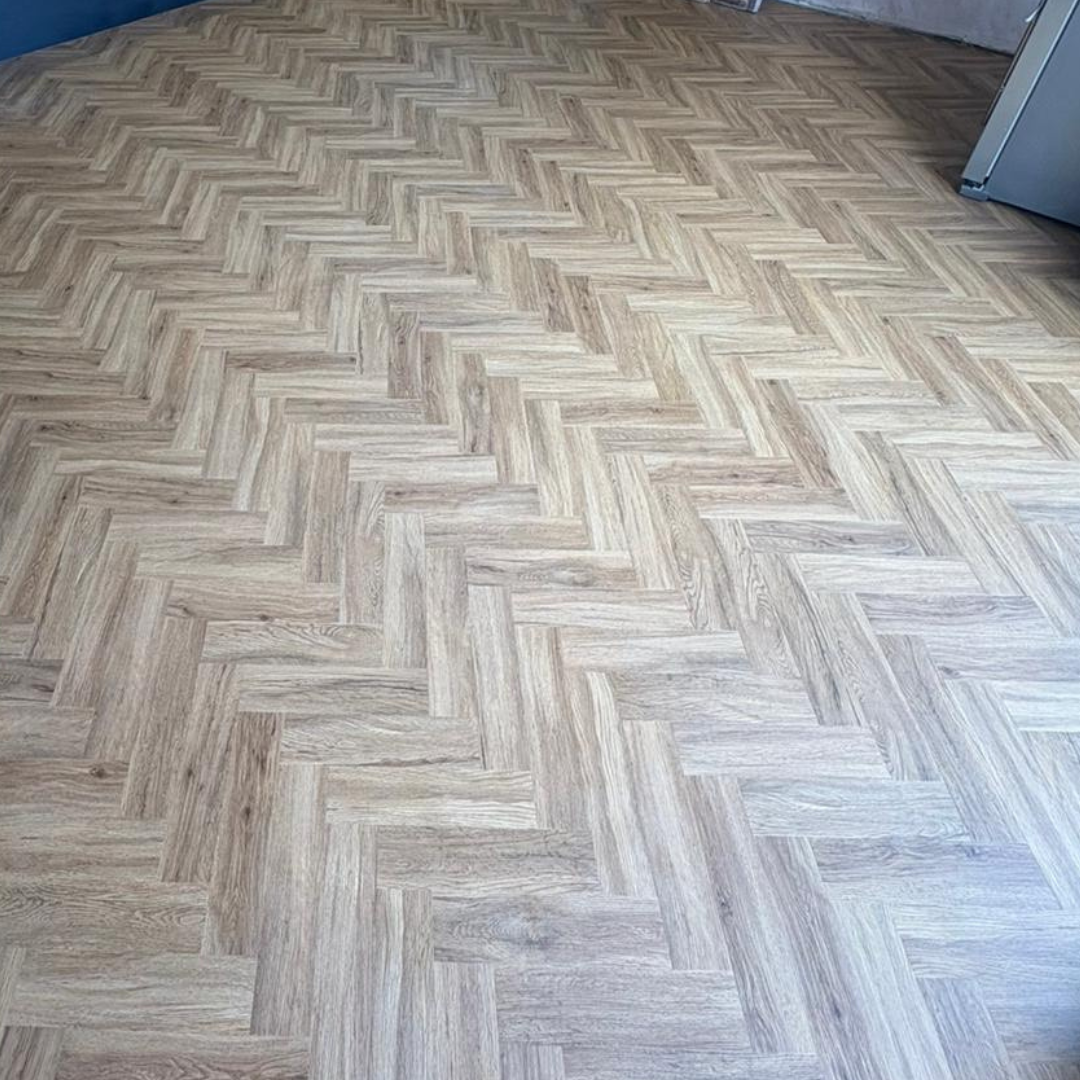
Herringbone LVT has become one of the most requested flooring styles in recent years. You see it in hallways, open-plan kitchen diners, period renovations and new-build homes alike. The pattern feels classic, but the material itself is modern.
So the real question is not whether it looks good — it clearly does. The question is whether herringbone LVT is genuinely worth the investment once you consider cost, installation, durability and long-term practicality.
This guide breaks it down properly.
What actually makes herringbone LVT different
Herringbone refers to the laying pattern rather than the product itself. Instead of laying planks in straight rows, each plank is installed at a 90-degree angle to create a zig-zag effect.
LVT (luxury vinyl tile) is a layered synthetic flooring product designed to replicate the look of real timber. It usually consists of:
- A wear layer (protection against scratches and scuffs)
- A printed design layer (the wood effect)
- A rigid or flexible core
- A backing layer for stability
When combined, you get the visual appeal of real wood but with improved water resistance and lower maintenance.
The herringbone pattern elevates the look considerably. It creates movement, visual interest and a more premium feel compared to straight-lay planks.
How much more expensive is it
In short — yes, it is more expensive than straight-lay LVT.
There are two reasons:
- Material wastage – The pattern creates more offcuts.
- Labour time – It takes significantly longer to install correctly.
While standard straight-lay LVT might be completed efficiently, herringbone requires precise setting out, consistent spacing and constant checking of alignment. If the first few rows are slightly off, the whole floor can drift out of square.
That additional time and skill is reflected in the fitting cost.
However, when compared to solid real wood in a herringbone pattern, LVT is still considerably more affordable overall.
Does it last
Quality LVT is designed for durability. A good wear layer (typically 0.5mm for residential use) will withstand heavy foot traffic in kitchens, hallways and living areas.
Herringbone LVT is:
- Scratch resistant
- Water resistant
- Suitable for underfloor heating
- Stable in fluctuating temperatures
Unlike real wood, it will not expand and contract in the same way. Unlike laminate, it is not vulnerable to swelling if exposed to moisture.
From a practical standpoint, it is one of the more forgiving decorative flooring options available.
Is it just a trend
This is where many homeowners hesitate.
Herringbone is not a new concept. It has been used in parquet flooring for centuries. What has changed is the accessibility of the look.
Traditionally, achieving a herringbone pattern meant installing solid wood blocks — expensive and labour intensive. LVT has made the style more attainable.
Because the pattern is historically rooted rather than trend-driven, it tends to have more staying power than purely contemporary styles.
That said, it is visually stronger than straight planks. In very small rooms, it can feel busy if not chosen carefully.
Where does it work best
Herringbone LVT works particularly well in:
- Hallways
- Open plan kitchen and dining spaces
- Living rooms
- Period properties
- Properties with high ceilings
It can make a rectangular room feel wider, as the eye follows the angled lines. In narrower hallways, it can create a more premium entrance feel.
In very compact rooms, however, a straight plank layout may appear calmer.
What about maintenance
Maintenance is straightforward.
Regular sweeping or vacuuming combined with occasional mopping using a pH-neutral cleaner is sufficient. There is no sanding, sealing or refinishing required.
Compared to real wood, it is significantly lower maintenance. Compared to laminate, it handles moisture better.
For busy households, children, pets or rental properties, this practicality often tips the balance.
What are the downsides
No flooring choice is perfect.
Herringbone LVT:
- Costs more to fit than straight-lay
- Requires a properly prepared subfloor
- Cannot usually be repaired invisibly if a single plank is damaged
- Takes longer to install
Subfloor preparation is particularly important. Any unevenness will show through over time, especially with glue-down systems.
This is why professional installation is strongly recommended. The pattern magnifies inaccuracies.
Does it add value to a property
Flooring rarely adds direct monetary value in isolation, but it absolutely influences perception.
A well-installed herringbone LVT floor gives an immediate sense of quality. Estate agents often comment on flooring because it impacts first impressions.
In competitive housing markets, presentation matters. While it may not increase valuation figures on paper, it can improve saleability and buyer appeal.
So is herringbone LVT worth it
It depends on priorities.
If your goal is:
- A premium aesthetic
- Durability without high maintenance
- Water resistance
- A timeless pattern
Then yes, it is often worth the additional cost.
If budget is the primary concern, straight-lay LVT or laminate may offer a more economical solution.
For homeowners wanting the look of traditional parquet without the expense and upkeep of solid timber, herringbone LVT sits in a very strong middle ground.
Many customers exploring options through Floors2U find that once they compare it side by side with laminate and real wood alternatives, the balance between design and practicality becomes clearer.
Ultimately, it is not the cheapest choice — but it is rarely regretted when installed properly.