
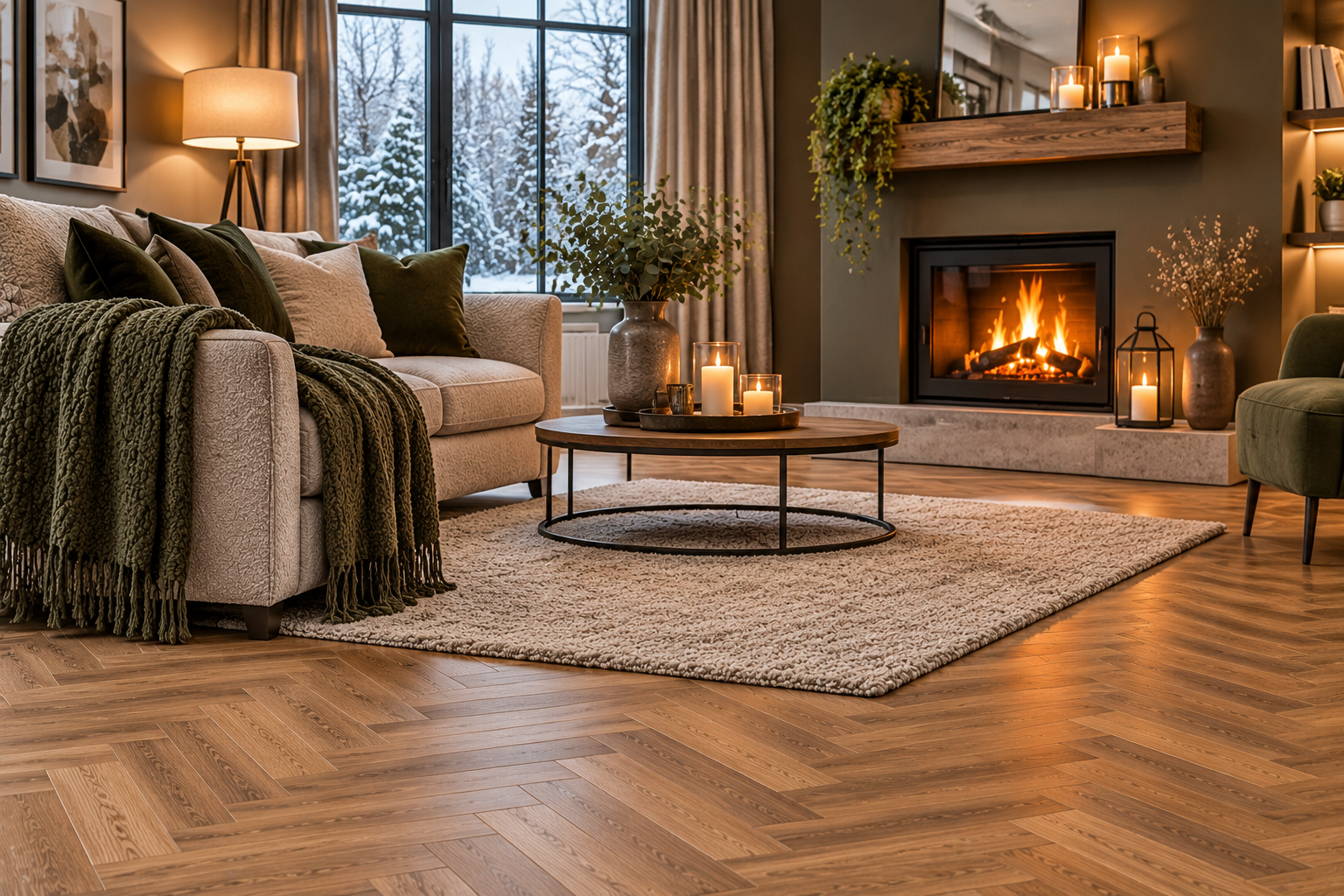
Winter has a way of changing how we see our homes. As daylight becomes shorter and evenings are spent indoors, colours, textures and materials that might go unnoticed during summer suddenly become much more important.
For winter 2026/2027, interior inspiration is taking a richer, more expressive direction. Think deeper wood shades, tactile surfaces, heritage inspired patterns and flooring that brings personality to a room rather than simply blending into the background.
But creating a beautiful winter interior doesn’t mean choosing something that will look dated by spring. The most successful flooring designs balance current influences with materials and finishes that will continue to work throughout the seasons.
Here are eight flooring trends worth exploring this winter, along with ideas for incorporating them into different areas of your home.
- Goodbye Cool Grey, Hello Golden Honey Tones
The once dominant grey flooring look is giving way to a warmer colour palette.
Honey, amber and golden oak shades are becoming appealing alternatives for homeowners who want interiors that feel welcoming without sacrificing a clean, contemporary appearance.
These colours work particularly well with off white walls, natural fabrics and furniture featuring deeper brown or earthy accents.
Unlike very pale flooring, which can sometimes appear washed out under artificial lighting, golden wood tones introduce a little more depth and character.
Where Does This Look Work Best?
Living rooms and dining areas are particularly well suited to honey coloured flooring, although the same tones can also create a lovely appearance in bedrooms and hallways.
For a contemporary finish, consider wider planks with subtle grain patterns. If your property has more traditional features, a wood design with greater variation between individual planks can create a more established appearance.
The effect can be achieved using natural wood, laminate or luxury vinyl tiles, making it accessible across different budgets.
- The Return of Deep, Dramatic Wood Flooring
Not every winter interior needs to be light and neutral.
Deep walnut, espresso brown and smoked timber finishes offer a completely different approach, introducing contrast and a sense of sophistication.
These darker shades work especially well in rooms with generous natural light, where the grain and variation within the flooring can remain visible throughout the day.
Pairing dark wood with pale walls creates a striking contrast, while combining it with olive green, burgundy or chocolate brown can produce a more dramatic interior.
Getting the Balance Right
Dark flooring can look fantastic, but the surrounding colours matter.
In smaller rooms, using lighter furniture and keeping walls relatively bright can prevent the space from feeling too enclosed.
It’s also worth considering maintenance. Dust, pet hair and small marks may be more noticeable on certain dark, smooth finishes.
Choosing a textured surface or a design with natural colour variation can help create a more forgiving appearance.
- Heritage Patterns With a Contemporary Twist
Traditional flooring patterns are finding their place in modern interiors.
Herringbone remains a favourite, but the appeal goes beyond its familiar zigzag arrangement. Homeowners are increasingly interested in flooring that introduces visual movement and architectural character.
A herringbone floor can make a relatively simple room feel more considered, particularly when the pattern is allowed to remain visible rather than being hidden beneath large furniture.
For winter interiors, medium and darker oak shades can give these traditional layouts a particularly attractive appearance.
Choosing the Right Pattern for Your Space
Plank proportions can make a considerable difference to the finished result.
Smaller blocks can create a detailed, traditional appearance, while larger herringbone planks often feel more contemporary.
Before deciding, consider the room’s shape, entrances and main viewing angles.
In open plan spaces, the direction of the pattern can influence how the different areas connect visually.
Herringbone designs are available across several flooring categories, including LVT, laminate and engineered wood, although not every collection offers the same installation options.
- Carpet With Character: Texture Takes Priority
Plain, smooth surfaces aren’t the only way to create a sophisticated interior.
Carpet is an ideal opportunity to introduce texture, especially in spaces where comfort and relaxation are important.
Loop pile designs, subtle ribbed finishes and carpets with natural looking fibres can add visual interest without relying on bold colours.
These styles work particularly well in bedrooms, lounges and quieter areas of the home.
Rather than standing out immediately, textured carpets often reveal their character through the way light falls across the surface.
The Appeal of Natural Looking Finishes
Oatmeal, stone, warm taupe and soft brown are versatile choices that complement both painted and wooden furniture.
A textured neutral carpet can also provide a useful foundation if you enjoy changing your room’s accessories throughout the year.
However, appearance shouldn’t be the only consideration.
Some loop pile constructions may be unsuitable for households with pets whose claws could catch in the loops. Stairs and busy family areas also require carpets with an appropriate durability rating.
Checking the manufacturer’s recommended usage is essential before settling on a particular design.
- The New Neutrals Are Anything but Boring
Neutral flooring has always been popular, but the colours associated with it are becoming more varied.
Instead of relying entirely on white, pale grey and beige, consider shades such as mushroom, clay, greige and warm stone.
These colours offer a softer alternative to stark interiors while remaining easy to coordinate with different decorative styles.
For example, mushroom coloured carpet can complement sage green walls, while a warm stone effect LVT floor can work beautifully alongside wooden kitchen cabinets.
Pay Attention to Undertones
Two flooring samples might appear almost identical in a showroom but look noticeably different once placed in your home.
One may contain pink or yellow undertones, while another leans towards grey or green.
Natural daylight, artificial lighting and surrounding furniture can all influence how these colours appear.
Viewing samples in the actual room is therefore an important part of choosing a neutral floor that works with your existing interior.
- Wider Planks for a More Relaxed Appearance
Plank width can have just as much influence on a room’s appearance as the colour of the flooring.
Wide plank designs are particularly appealing in interiors that favour simplicity and natural materials.
With fewer visible joins across the floor, wider planks can create a calmer appearance that allows the wood grain to become the main feature.
This style is especially effective in larger living spaces and open plan interiors, where the full length and width of the planks can be appreciated.
Is Wider Always Better?
Not necessarily.
The proportions of the room should influence your decision.
In a narrow hallway or compact bedroom, excessively wide planks may not create the effect you’re hoping for.
The direction of installation and the amount of natural light can also affect the finished appearance.
It’s worth comparing different plank sizes before committing, particularly if you’re choosing between laminate, LVT and engineered wood.
- Flooring Inspired by Natural Materials
The desire to bring natural influences indoors extends beyond traditional wood finishes.
Stone inspired flooring, subtle mineral textures and realistic timber grain designs are all worth considering for winter 2026/2027.
These surfaces can introduce variation and depth without overwhelming the room.
For kitchens and bathrooms, stone effect LVT can offer the appearance of natural stone with different maintenance requirements from traditional stone tiles.
In living spaces, realistic wood effect flooring can provide an attractive alternative where the practical characteristics of laminate or LVT are preferred.
Looking Beyond Colour
Texture is particularly important when choosing a natural effect floor.
Some products feature embossed surfaces designed to reflect the grain or pattern visible in the design.
Registered embossed flooring goes a step further by aligning the surface texture with the printed pattern, creating a more realistic appearance.
However, realism varies considerably between products, so it’s worth examining full size samples rather than relying entirely on catalogue photographs.
- Individuality Is Becoming More Important Than Matching Everything
One of the most interesting directions in interior design is the move away from making every surface look identical.
Instead, flooring can be used to give different rooms their own personality.
A bold herringbone entrance hall might lead into a living room with understated straight plank flooring, while upstairs bedrooms feature soft carpets in complementary colours.
The result can feel more interesting than using one finish everywhere.
Creating a Sense of Continuity
Using different flooring materials doesn’t mean the house needs to feel disconnected.
Repeating similar undertones can create a natural relationship between rooms.
For example, a warm oak hallway can complement beige carpeting upstairs without the two materials needing to match exactly.
Practical details are equally important.
Changes in floor height, door clearances and the need for transition profiles should all be considered when planning multiple flooring finishes.
A carefully planned combination of materials can give each space its own identity while maintaining a consistent feel throughout the property.
How to Choose a Flooring Trend That Will Last
It’s easy to be influenced by a beautiful photograph, particularly when a particular flooring style seems to be appearing everywhere.
But a successful flooring choice should do more than look attractive on the day it’s installed.
Think about how the room is used, the amount of natural light it receives and the furniture you intend to keep.
A dramatic dark wood floor might look incredible in a spacious dining room but feel less suitable in a small hallway with limited daylight.
Similarly, a luxurious carpet may be ideal for a bedroom but less practical in a busy entrance area.
Consider how much cleaning and maintenance you’re comfortable with, and whether the flooring is suitable for children, pets or heavy foot traffic.
Most importantly, choose something you genuinely enjoy looking at.
Trends can provide inspiration, but your home doesn’t need to follow every new design direction to look beautiful.
A New Season, A Different Perspective
Winter interiors don’t have to revolve around thick rugs, dark furniture and traditional decorating.
Sometimes, a change in flooring colour or pattern is enough to give a familiar room an entirely different atmosphere.
A golden oak finish can brighten a space on a dull afternoon. A richly coloured wood floor can introduce depth, while a carefully chosen carpet can soften the appearance of a bedroom and create a more relaxed setting.
What makes this season’s flooring inspiration particularly interesting is the freedom to experiment. Traditional patterns can sit comfortably alongside modern furniture, darker finishes can bring character to contemporary spaces, and subtle textures can make even the simplest colour schemes feel more considered.
Across London and Essex, homes vary enormously in age, layout and architectural style. A flooring design that complements a Victorian terrace may create a completely different effect in a modern apartment or a spacious family home. Understanding those differences is far more valuable than following a particular trend simply because it’s fashionable.
Ultimately, winter 2026/2027 is an opportunity to explore flooring with a little more personality. Whether that means introducing warmer colours, experimenting with a traditional pattern or choosing an unexpected finish, the possibilities extend well beyond the usual seasonal decorating ideas.
The most memorable interiors aren’t necessarily the ones that follow every trend. They’re the ones where each material, colour and detail feels like it belongs.